uv vs pip
January 21, 2026
pip the the standard Python package installer is now being replaced by uv which is written in rust (i mean just writing in rust doesnt make it fast, but through innovative architecture and efficient implementation, ), which is said to be super fast.
Common pain points it addresses which pip had are :
- slow installation times
- venv managment complexity
Key features in which uv stands out are :
- fast package installation and dependency resolution
- built in venv management
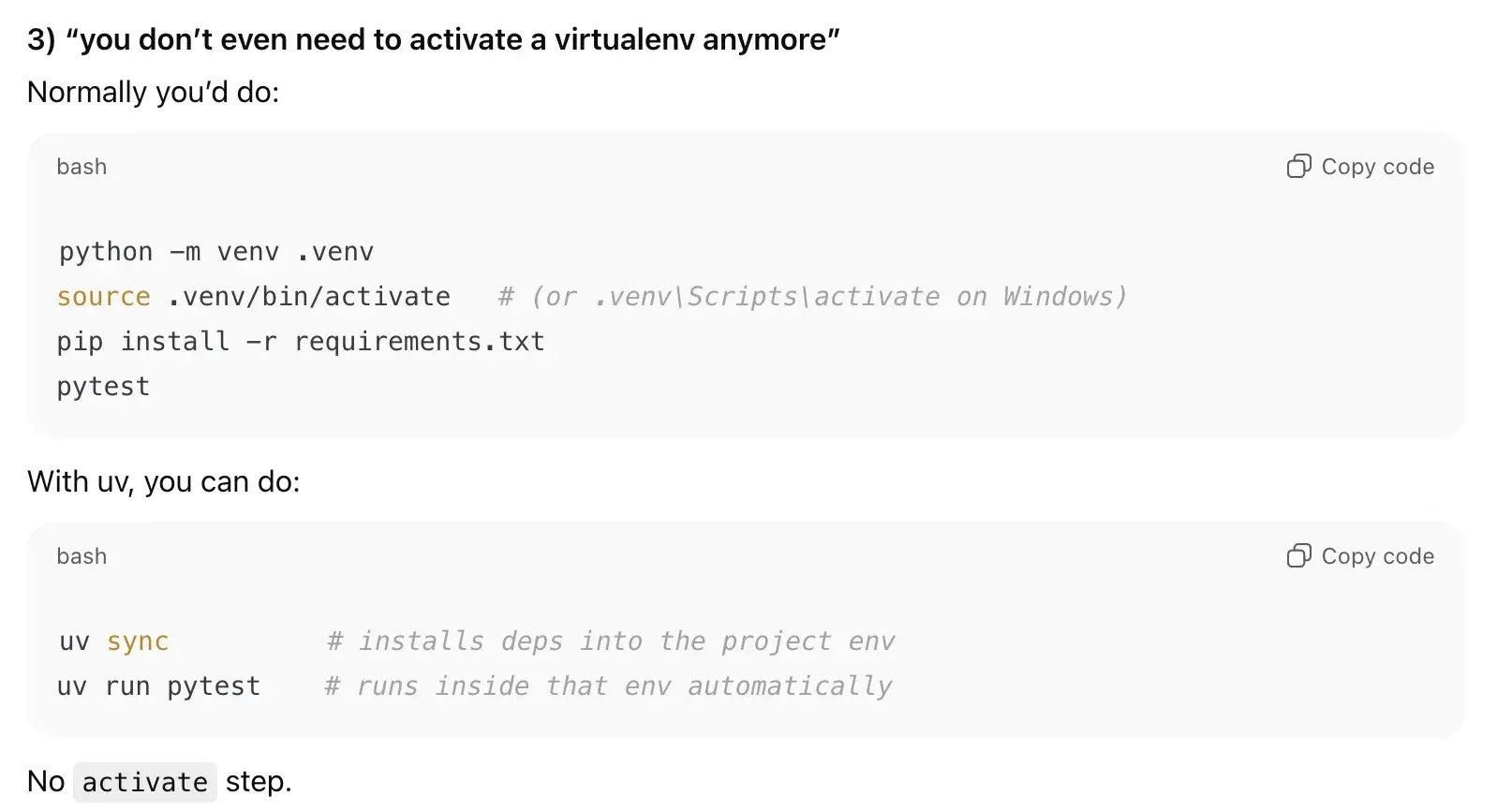
- Can create and manage virtual environments.
With old-school pip, people often end up with: requirements.txt (prod), requirements-dev.txt (dev tools like pytest, black), requirements-ci.txt, etc.
And sometimes they manually remove dev-only packages before deploying.
But in uv, You keep dependencies in one place (usually pyproject.toml) and split them into groups (like dev, test, etc.). Then you install whichever group you need. something like this :
[project]
dependencies = [
  "fastapi",
  "pydantic",
]

[dependency-groups]
dev = ["ruff", "mypy"]
test = ["pytest"]
Prod only -> uv sync
include dev group -> uv sync --group dev
include multiple groups -> uv sync --group dev --group test
This image is from someone on hackernews.

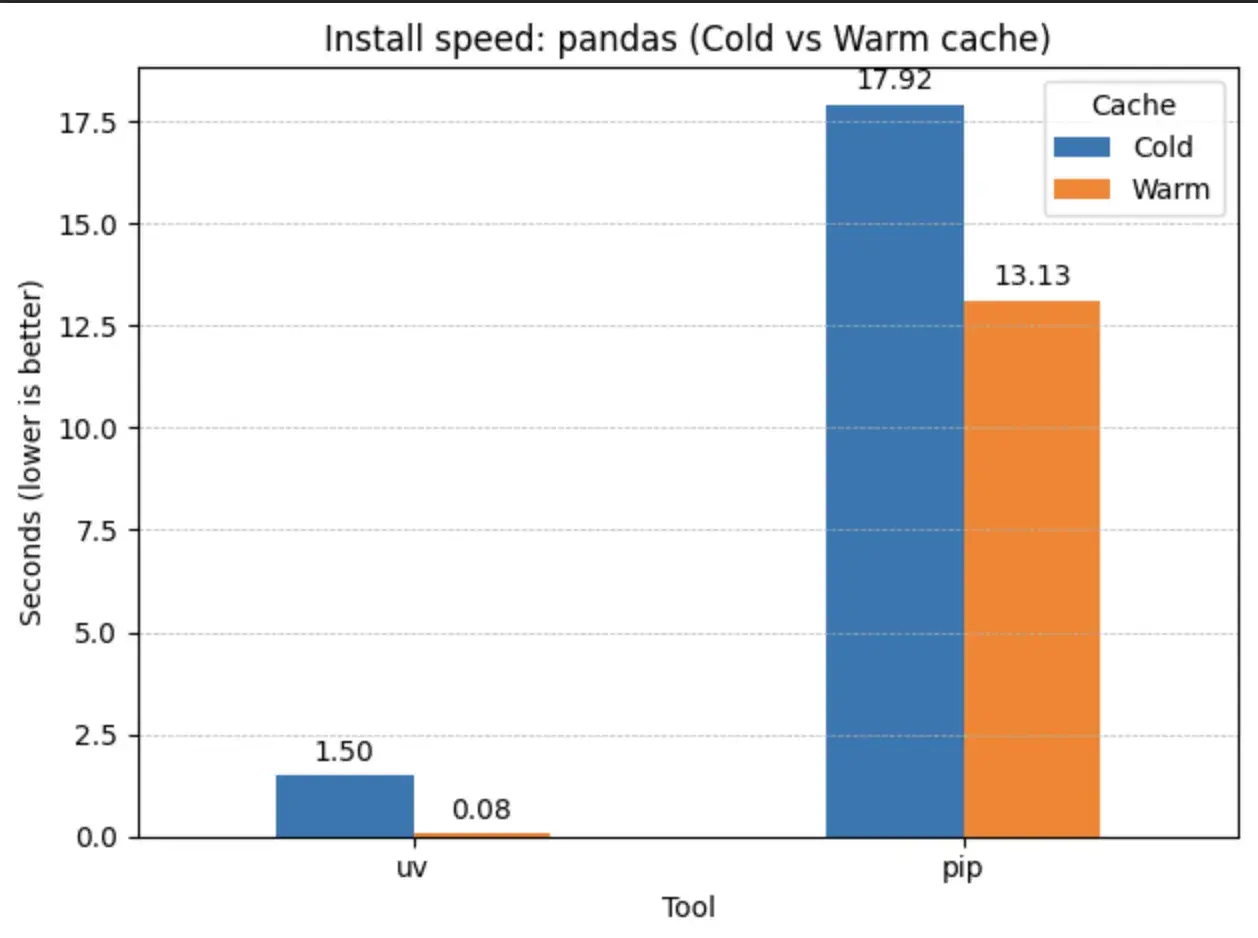
Ran a simple experiment to see th einstallation speeds, here's how the results look like :
You can check out the code here -> Google Colab Code